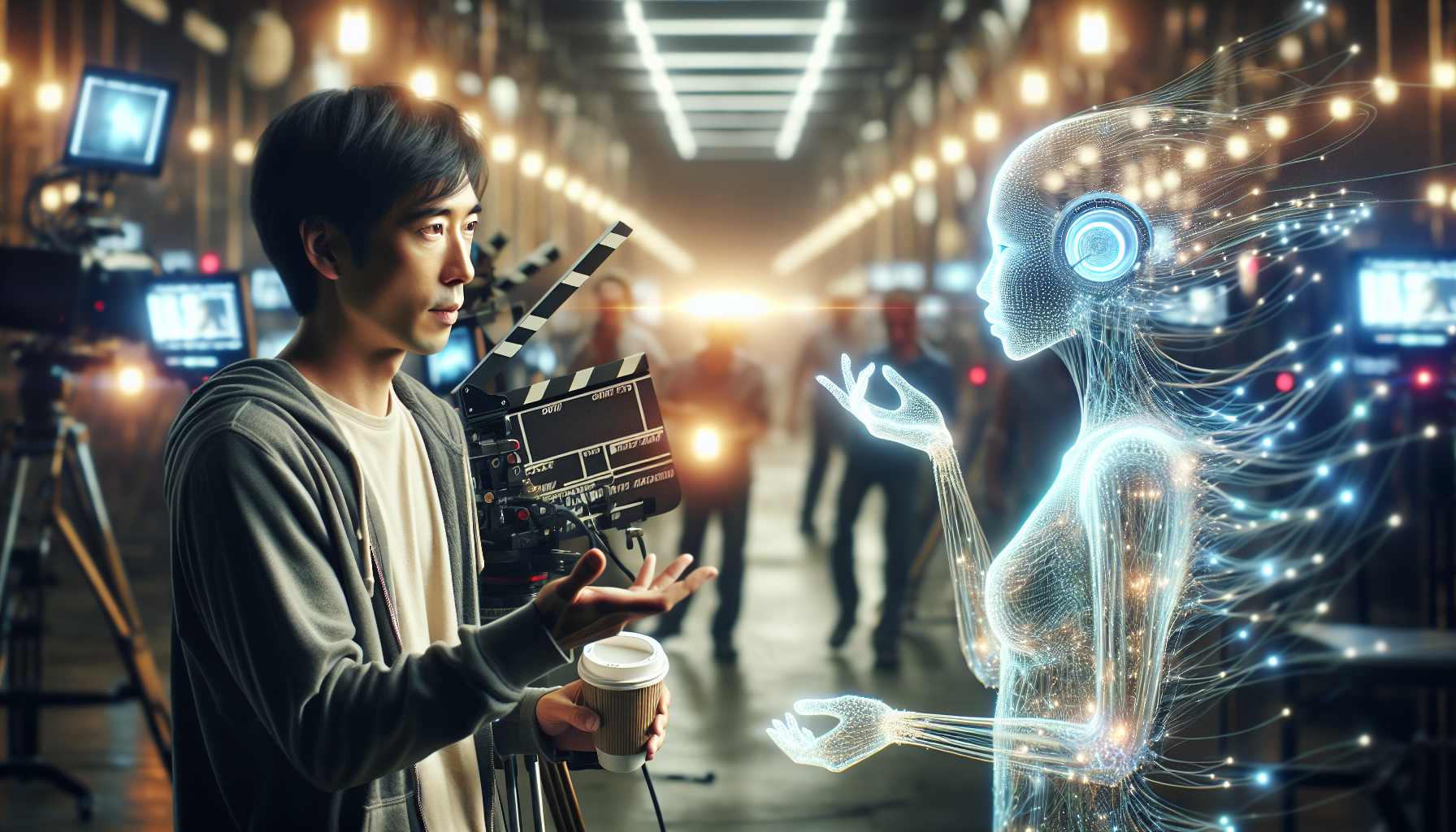
As the realms of cinema and technology converge, film directors like Jovi Chong are pioneering new frontiers with AI Agent Digital Workers. This article delves into Chong’s innovative leap, merging artistic vision with cutting-edge artificial intelligence.
The Evolution of Film Directing in the AI Era
In the tapestry of film directing, the thread that has most vibrantly colored the canvas in recent years is undoubtedly the integration of AI technologies. The traditional role of a film director, which encompasses the immense responsibility of bringing a script to life through a unified creative vision, has seen a significant evolution with the advent of these digital advancements. Directors like Jovi Chong are at the forefront of this transformation, melding the art of storytelling with the efficiency and innovation provided by AI-driven digital workers.
The responsibilities and the creative process involved in directing a film are immensely complex and multifaceted. From the inception of a narrative idea to the meticulous editing in post-production, each phase required a director’s undivided attention and unique vision. However, the integration of AI within this workflow has opened new avenues for directors to explore. AI agents, acting as digital workers, are now shouldering tasks that range from the analytical—such as dissecting screenplay content for thematic consistency—to the highly technical, like streamlining the visual effects (VFX) pipeline. These digital workers perform with remarkable accuracy and speed, allowing directors more space to focus on the creative and interpretive aspects of their role.
Jovi Chong’s pioneering approach to employing AI in his filmmaking process exemplifies the potential of these technologies to transform traditional filmmaking roles. By leveraging AI for tasks like scene analysis, Chong can identify narrative elements that might need strengthening or adjustment earlier in the production process. This not only results in a more coherent storyline but also harnesses the power of data-driven decisions to elevate the quality of filmmaking. In the realm of production, AI’s role in managing logistics—from scheduling to budget tracking—frees up human resources to engage more deeply with the creative aspects of the project.
Perhaps most significant is the impact of AI in the domain of VFX. By employing AI-driven digital workers, Chong is able to create visually stunning scenes that were previously either too costly or technically challenging. This democratization of VFX allows for greater experimentation and innovation, pushing the boundaries of what is possible in storytelling. Moreover, the utilization of AI in editing processes, through techniques such as automated editing and color correction, ensures a seamless aesthetic narrative that aligns with the director’s vision.
The integration of AI into film direction heralds a new era where efficiency and creativity coalesce, enabling directors like Jovi Chong to redefine the boundaries of cinema. This collaborative partnership between human creativity and artificial intelligence fosters a dynamic production environment where complex tasks are streamlined, and creative visions are realized in their most potent form. In embracing AI as digital workers, directors are not only enhancing the storytelling process but are also setting a new standard for innovation in the film industry.
Jovi Chong and the Digital Worker Revolution
Jovi Chong’s foray into the realm of AI Agent Digital Workers signifies a pivotal moment in cinematic production, underscoring a harmonious blend of human creativity and artificial intelligence. Chong leverages these digital aids not merely as tools but as collaborators, redefining the filmmaker’s relationship with technology. In script analysis, AI technologies offer profound insights into narrative structures, character arcs, and thematic cohesion, enabling Chong to refine storytelling elements with unparalleled precision. This symbiotic dialogue between director and digital assistant ensures a narrative depth that resonates more effectively with audiences.
Similarly, in the visual effects (VFX) domain, Chong harnesses AI’s capabilities to push the boundaries of what’s visually possible, breathing life into the most intricate and imaginative worlds without the constraints of traditional VFX workflows. The AI-driven VFX processes streamline tasks such as scene tracking, character animation, and environment creation, allowing Chong to allocate more time to creative exploration rather than getting bogged down by technical complexities.
Moreover, the integration of AI in data management transforms the logistical nightmare of handling vast volumes of production data into a streamlined, efficient process. Chong capitalizes on AI’s ability to organize, tag, and retrieve footage and production assets instantaneously, enhancing communication and collaboration across the entire production team. This efficiency not only accelerates the post-production phase but also introduces a level of precision and flexibility previously unattainable.
By pioneering the adoption of AI Agent Digital Workers, Chong is not just optimizing the filmmaking process but also exploring new narrative possibilities and storytelling techniques. This evolution in production methodology represents a significant shift in the creative landscape, where the blend of human intuition and AI’s analytical prowess can unlock previously untapped creative potentials. It signals a future where the collaborative synergy between filmmakers and digital agents could redefine not just how stories are told but also the stories that can be told, offering audiences experiences that are more immersive, emotive, and engaging. Through this human-AI partnership, Chong exemplifies a new era of filmmaking that harmonizes technical innovation with artistic vision, potentially transforming the roles within the industry and setting a new standard for cinematic creation.
Conclusions
In the quest to reshape cinematography, Jovi Chong stands as a beacon of innovation, harnessing the prowess of AI Agent Digital Workers. Entwining technology with human ingenuity, Chong’s approach not only optimizes film production but also expands the creative palette, paving the way for future storytelling possibilities.
Leave a Reply