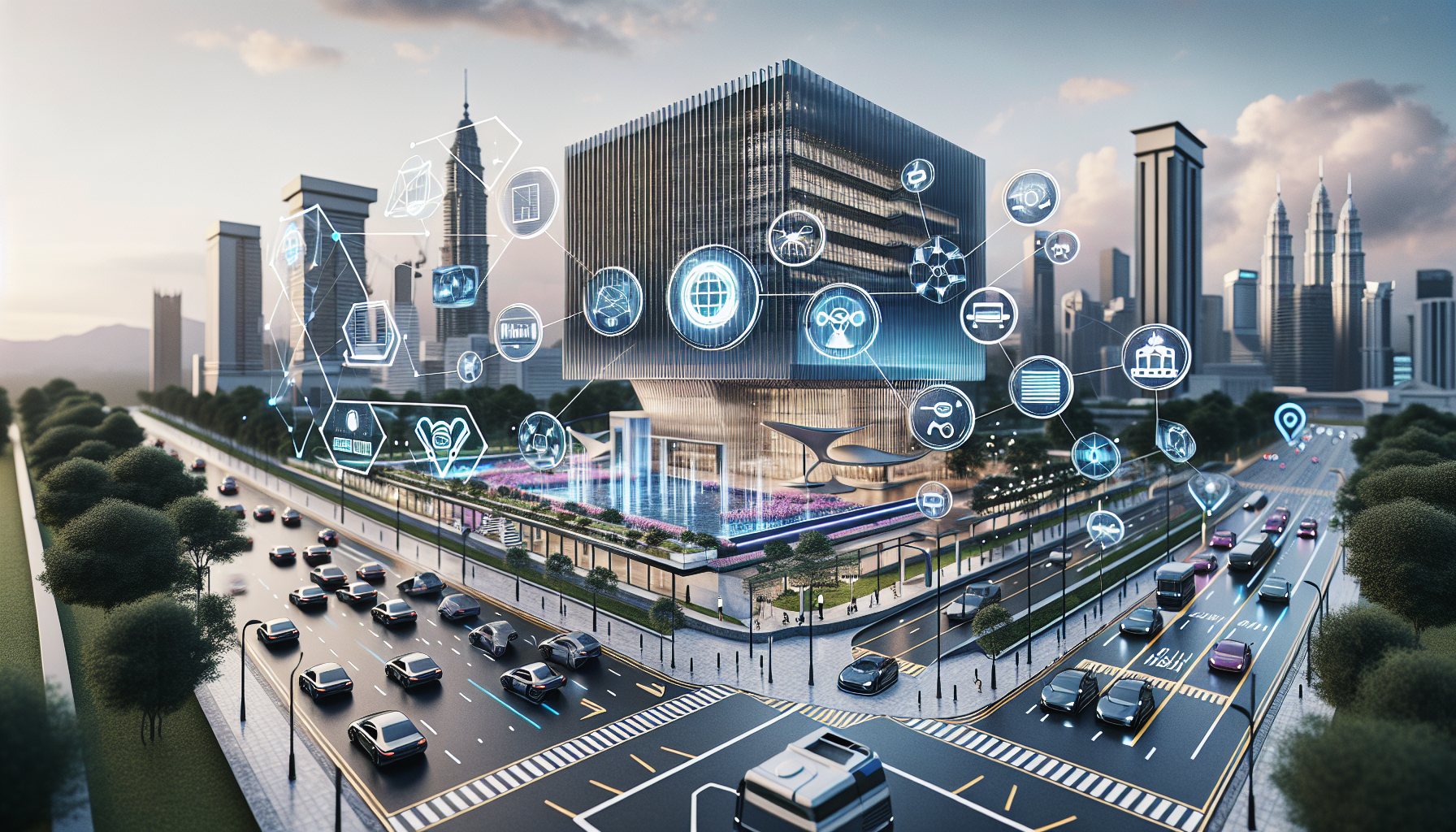
Malaysia’s Ministry of Transport (MOT) is taking a bold leap into the future by integrating Artificial Intelligence (AI) agents across its operations. This exploration stands to revolutionize how the transportation sector functions, from enhancing efficiency to ensuring safety. In this article, we delve into the possibilities and challenges of this innovative endeavor in Malaysia.
The Rise of Agentic AI and Its Global Impact
Agentic AI represents a significant leap towards sophisticated automation; it’s not merely about executing tasks but learning and adapting from them. In the realm of Malaysia’s transport sector, this translates into a myriad of potential applications, each aimed at augmenting the efficiency and safety of current operations. For instance, in software development, agentic AI could lead the way in creating more intuitive transport management systems, capable of predicting and mitigating traffic congestions in real-time. Customer support services could be revolutionized by AI agents that not only handle inquiries with unprecedented speed and accuracy but also learn from interactions to improve future responses. Moreover, cybersecurity, a critical concern for the transport sector, could see remarkable improvements with AI agents designed to detect and neutralize threats more efficiently than ever before. Through these applications, agentic AI is poised to not only enhance operational efficiency within Malaysia’s transportation sector but also elevate it to global competitiveness.
Strategic Integration of AI Agents by MOT
Following the exploration of agentic AI’s transformative role globally, the Ministry of Transport Malaysia (MOT) is set to extract pivotal values from these technologies to enhance its transport facilities profoundly. MOT’s strategic maneuver into integrating AI agents transcends traditional methodologies, focusing on augmenting road safety, optimizing port operations, and elevating aviation standards. This integration is envisaged not just as a technological upgrade but as a pivotal reshaping of transport modalities to ensure efficiency, safety, and sustainability.
The structural dynamics within MOT are ripe for AI infusion, given its multifaceted responsibilities in land, air, and sea transportation. In road transport, AI agents could be deployed for real-time traffic analysis and management, reducing congestion and enhancing safety through predictive analytics on accident hotspots. For port management, AI could revolutionize the logistics and handling of goods through intelligent scheduling and autonomous handling systems, aiming for a seamless flow of trade. Aviation could witness heightened safety and efficiency measures with AI-driven predictive maintenance and automated air traffic control mechanisms.
The strategic integration requires a holistic approach, acknowledging the need for structure within MOT’s agencies for fostering AI readiness. This involves comprehensive training programs, reforming policy frameworks to support AI adoption, and investing in robust data infrastructure essential for AI systems. Collaboration with industry experts and international partners will be crucial to imbibe best practices and technologies.
Moreover, this chapter sets the stage for understanding the broader implications of AI agents in the following discourse on economic and environmental considerations. As MOT ventures into this digital transformation, it carves out a path that promises not only enhanced operational efficiency and safety but also a commitment towards sustainable and economically viable transport solutions. The strategic deployment of AI agents thus emerges as a cornerstone in Malaysia’s journey towards becoming a smart mobility hub, aligning with global advancements while catering to local nuances.
AI Agents in Malaysia: Economic and Environmental Considerations
Adopting AI agents within Malaysia’s transport sector represents a significant leap towards modernity, promising to reshape economic landscapes and environmental frameworks alike. By automating and optimizing transportation systems, AI has the potential to greatly enhance operational efficiencies, reduce human error, and significantly cut costs. Economically, this can translate into more competitive pricing for logistics and public transportation, making them more accessible to the general populace and potentially spurring increased economic activity. Additionally, the integration of AI can lead to the creation of high-tech job opportunities, indirectly boosting local economies and fostering a technologically skilled workforce.
From an environmental standpoint, AI agents can contribute to the reduction of carbon emissions and pollution. Through efficient route planning and traffic management, AI can decrease fuel consumption across various modes of transport, from buses to cargo ships. This efficiency not only aligns with global sustainability goals but also positions Malaysia as a leader in environmentally friendly transport solutions in the ASEAN region. Moreover, predictive maintenance enabled by AI can ensure that vehicles and infrastructure are operating at peak efficiency, reducing unnecessary energy use and extending the lifespan of crucial assets.
However, the advancement comes with its challenges. The energy required to train powerful AI systems can be substantial, posing a potential environmental cost. Therefore, it is imperative that Malaysia seeks renewable energy sources to support its digital transformation. Aligning AI implementation with Malaysia’s national environmental policies and economic plans necessitates a balanced approach, considering both the immediate financial benefits and the long-term sustainability objectives.
Evaluating global precedents, it’s clear that successful adaptation involves not just the technology itself but also the integration of regulatory and ethical frameworks ensuring that AI advancements benefit society as a whole. Learning from countries that have pioneered AI in transportation, Malaysia can adopt best practices in minimizing environmental impact while maximizing economic gain. Thus, as Malaysia stands on the cusp of this technological evolution, it must carefully navigate the balance between economic growth and environmental stewardship to ensure a sustainable and prosperous future.
Navigating Ethical and Regulatory Waters
As Malaysia embarks on incorporating AI agents within its transport sector, it becomes imperative to navigate the ethical and regulatory terrain with precision. Ethical considerations encompass ensuring AI decision-making processes are transparent, nondiscriminatory, and accountable, especially when these decisions impact human lives directly. The necessity for a robust regulatory framework cannot be overstated; it should aim to safeguard public interest while fostering innovation. Drawing insights from international models, such as the EU’s Ethics Guidelines for Trustworthy AI, Malaysia can develop a set of principles tailored to its unique societal norms and values. This involves establishing clear guidelines on data privacy, consent, and security to address privacy concerns adequately. Moreover, regulatory measures must be dynamic, capable of evolving with advancements in technology, to prevent obsolete or stifling regulations that could hamper progress. Considering the economic and environmental implications discussed previously, these ethical and regulatory frameworks must also support sustainable growth, ensuring that AI deployment within the transport sector not only advances Malaysia economically but does so in an environmentally conscious and socially responsible manner.
Conclusions
Malaysia’s MOT’s venture into AI agents signifies a transformative shift in the nation’s transport ecosystem. Embracing agentic AI offers economic and efficiency benefits while posing environmental and ethical challenges. It is imperative to navigate this new terrain with careful planning, robust regulation, and an unwavering commitment to sustainability.
Leave a Reply