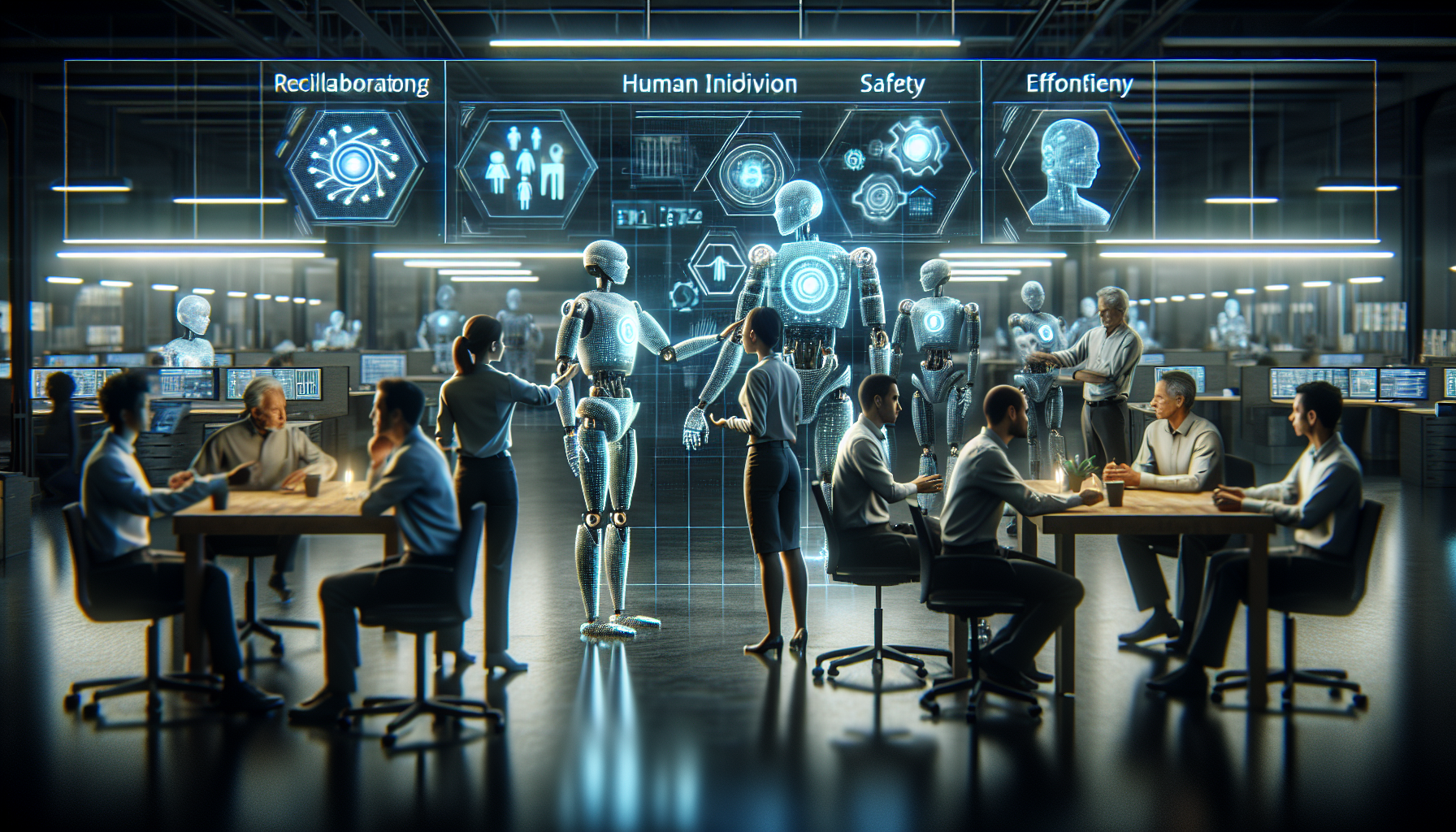
The landscape of employment is rapidly evolving, driven by technological breakthroughs such as artificial intelligence. This article dives into how Fatih from Talent Corp is embracing AI Agent Digital Workers, introducing a new era of productivity and the significant paradigm shifts that accompany this innovation.
The Rise of AI in Modern Workplaces
The digital revolution within modern workplaces has reached an unprecedented pace, with artificial intelligence (AI) standing at the forefront of this transformation. Organizations are increasingly relying on AI to streamline operations, enhance productivity, and foster a safer working environment. As AI continues to evolve, it has given rise to a new category of workers known as digital workers. These AI-driven entities are designed to perform a variety of tasks that were traditionally handled by human employees, from routine administrative duties to more complex analytical functions.
One of the key benefits of integrating AI into the workforce is the significant reduction in the need for humans to perform dangerous or tedious tasks. For instance, AI can efficiently handle the monitoring of hazardous work environments, reducing the risk of accidents and ensuring safer conditions for human workers. Moreover, AI’s capacity to analyze large datasets rapidly helps businesses make informed decisions quicker, thereby improving operational efficiency without compromising on safety standards.
However, the rise of AI poses challenges, such as a shift in the skills required by the workforce. As AI takes over routine tasks, there is a growing demand for employees to possess advanced technical skills to manage, maintain, and improve these AI systems. Additionally, there’s a concern that the ubiquity of AI might lead to increased micromanagement, as its algorithms can track performance metrics with unprecedented detail.
Despite these potential risks, the integration of AI into workplaces has been largely positive. Numerous professional sectors have successfully embraced AI, witnessing substantial improvements in efficiency and productivity. Examples abound, from healthcare, where AI-driven diagnostic tools aid in patient care, to manufacturing, where AI-controlled robots perform precise assembly tasks, underscoring AI’s capacity to enhance both operational efficiency and human safety. Through carefully considered implementation strategies, businesses can harness the potential of AI to complement human workers, ensuring that the digital revolution in workplaces advances in a manner that respects human dignity and promotes a harmonious human-AI coexistence.
Talent Corp and the Digital Frontier
In the evolving landscape outlined by the previous exploration into AI’s integration in modern workplaces, Fatih’s project with Talent Corp represents a pioneering step towards a new frontier: the deliberate and strategic implementation of AI Agent Digital Workers. Fatih envisions a dynamic where these digital entities are not merely tools but integral members of the workforce, capable of carrying out tasks ranging from data analysis to customer service with unparalleled efficiency and accuracy. Central to this initiative is the development of roles specifically designed for digital workers, a move that necessitates a nuanced understanding of AI capabilities and human-AI collaboration.
The implications of such an integration for talent management are profound. Traditional recruitment, training, and development paradigms are being reimagined to accommodate the unique strengths and limitations of AI workers. This entails not only identifying tasks where AI can excel but also ensuring that human employees are equipped to interact with and manage these digital counterparts effectively. Moreover, Fatih is deeply committed to fostering a diverse workforce, recognizing that diversity in AI training data and development teams can significantly reduce biases and enhance the robustness of AI solutions.
However, the vision extends beyond merely augmenting the workforce with AI agents. It seeks to harmonize the relationship between human and digital employees, ensuring that the introduction of AI workers bolsters rather than undermines human job satisfaction and productivity. Key to this balance is the recognition that AI agents and human employees bring different but complementary skills to the table. By strategically deploying AI agents in roles that leverage their unique capabilities, Talent Corp aims to free human workers from mundane tasks, allowing them to focus on complex, creative, and strategically significant initiatives.
This bold venture into the digital frontier by Fatih and Talent Corp, therefore, not only aligns with broader industry trends but also sets a benchmark for how organizations might navigate the future of work. It paints a picture of a workforce that is not replaced but enhanced by AI, where the potential of digital workers is harnessed to create a more efficient, innovative, and inclusive workplace. This approach underscores the importance of foresight in talent management and business operations strategies in the era of AI, emphasizing the need for a seamless integration of human and digital workers to secure a competitive edge in the rapidly evolving business landscape.
Conclusions
As Fatih from Talent Corp ventures into the realm of AI Agent Digital Workers, it marks a significant milestone in the way we understand labor and productivity. This article encapsulated the transformative power of AI in the workplace, while also scrutinizing the challenges inherent to a digital workforce. The future beckons with promising advancements, yet it serves as a reminder that human-centric approaches must govern our technological strides.
Leave a Reply