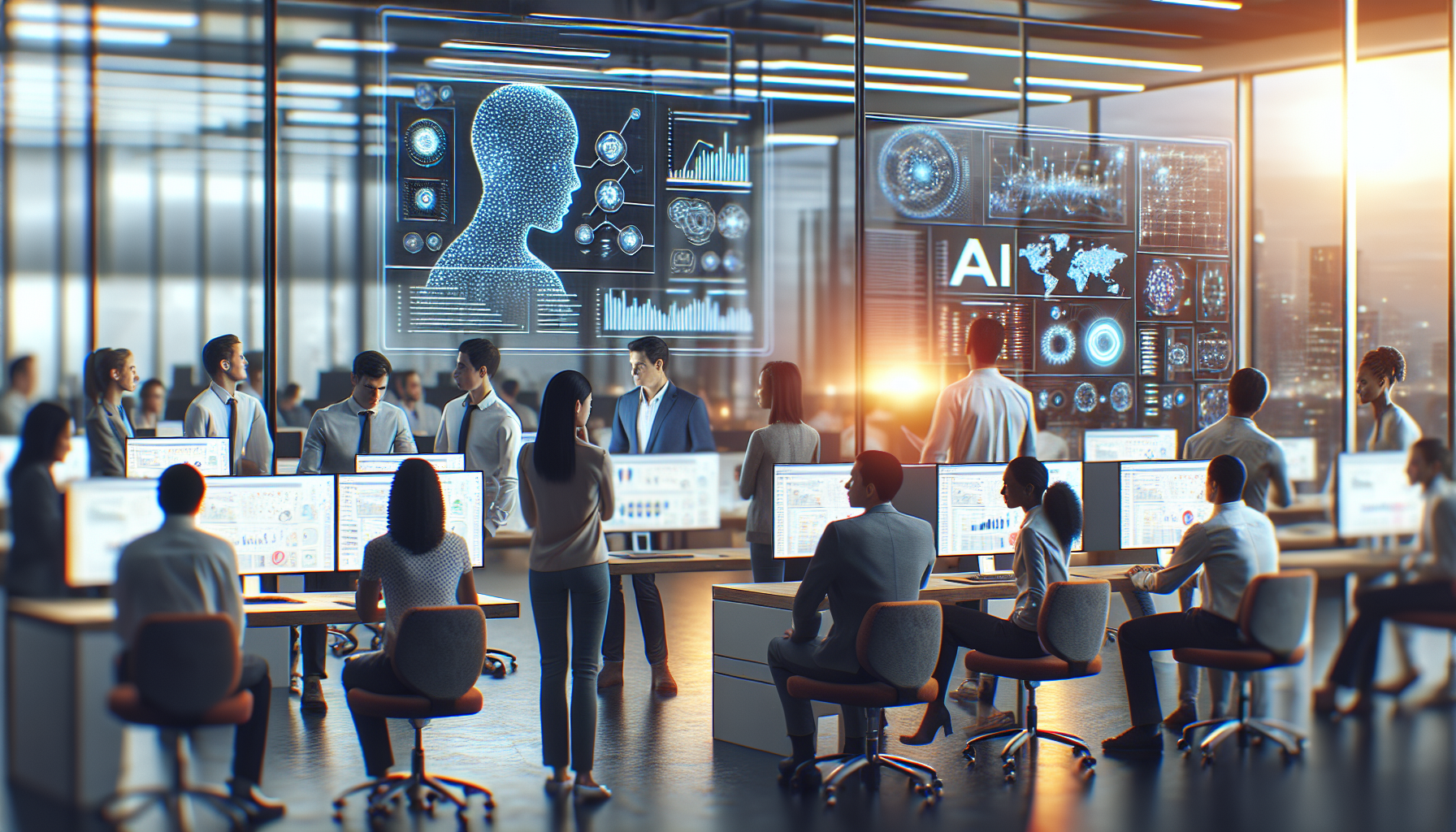
In the quest for competitive advantage, small to medium-sized enterprises (SMEs) are turning to artificial intelligence (AI) agents. This article delves into the transformative impact of AI on SMEs by addressing implementation strategies and tangible benefits.
AI Implementation Strategies for SMEs
Venturing into the realm of AI for small and medium-sized enterprises (SMEs) like Adam’s requires a calculated and strategic approach. The first step in this journey is identifying which business processes can significantly benefit from AI optimization and automation. Recognizing areas such as customer service, inventory management, or sales forecasting where AI can introduce efficiencies is pivotal.
Overcoming obstacles like budget limitations, a scarcity of in-house AI expertise, and resistance towards technological change is crucial for SMEs. A pragmatic strategy involves beginning with affordable, scalable AI solutions that offer a clear return on investment. Additionally, SMEs should seek partnerships or invest in training programs to cultivate the necessary technical skill sets within their teams.
Selecting the right AI tools and technologies is a make-or-break decision in the implementation process. SMEs should opt for AI platforms that seamlessly integrate with their existing systems and require minimal custom development. Tools that offer user-friendly interfaces and out-of-the-box functionalities are particularly well-suited for SMEs with limited IT support.
Creating a cross-functional team that encompasses members from IT, operations, and strategy is essential for leveraging the full power of AI. This team is responsible for overseeing AI integration across various business functions, ensuring that AI initiatives align with broader business objectives.
Illustrating the practical application of AI in SMEs, platforms like Salesforce Einstein or Zoho CRM have empowered businesses to enhance customer engagement through personalized interactions and predictive analytics. Similarly, inventory management tools equipped with AI capabilities have streamlined operations, reducing overhead costs and minimizing stockouts.
In summary, the strategic implementation of AI for SMEs involves a deep comprehension of potential AI benefits, overcoming prevalent challenges with resourceful planning, and engaging in continuous learning and adaptation. By following these considerations, SMEs can harness AI to not only thrive but also establish a competitive edge in today’s digital economy.
Real-world Benefits and Case Studies
After exploring the strategic approach to AI adoption in the previous chapter, it becomes paramount to illustrate the real-world benefits and potential that AI agents hold for SMEs. Through the integration of AI, small and medium-sized enterprises have seen remarkable transformations in various facets of their operations, particularly in refining customer journeys, optimizing supply chain efficiency, and harnessing predictive analytics for foresighted business planning.
One of the compelling examples can be seen in a retail SME that employed AI agents for personalized customer recommendations. By analyzing customer behavior and preferences, the AI system curated custom product recommendations, significantly enhancing the customer shopping experience. This led to a marked increase in customer satisfaction and loyalty, which in turn, drove an upsurge in sales revenue.
In the realm of supply chain operations, another SME utilized AI to optimize its inventory management. The AI system predicted inventory needs based on historical sales data, current trends, and other external factors, thus ensuring optimal stock levels. This not only reduced unnecessary storage costs but also minimized stockouts, ensuring timely order fulfillment and improved supplier relations.
Predictive analytics, powered by AI, has been another game-changer for SMEs. For instance, a small manufacturing enterprise deployed AI to forecast future product demands. This foresight enabled the company to adjust production schedules and resource allocation efficiently, leading to cost savings and increased operational efficiency. This predictive capability also helped in identifying potential market opportunities ahead of competition, providing a significant edge in the market.
Future developments in AI promise even more revolutionary tools for SMEs. Advancements in natural language processing could enable more sophisticated customer service chatbots, providing instant, 24/7 customer support while maintaining a personalized touch. Furthermore, improved machine learning algorithms are expected to offer even more accurate predictive analytics, enabling SMEs to make even more informed decisions.
The AI-driven enhancements extend beyond operational efficiencies and revenue growth. They also empower SMEs to stand out in a competitive market, offering unique, tech-driven services and products that cater to the modern consumer’s expectations. As AI technology continues to evolve, the potential for SMEs to innovate and scale their businesses is boundless, heralding an exciting era for small business ecosystems propelled by AI advancements.
Conclusions
Small to medium-sized enterprises stand to gain significantly from leveraging AI agents. Implementing AI strategically can automate processes, enhance customer engagement, and facilitate smart decision-making. As illustrated by case studies, early adopters are already reaping the benefits, indicating a bright future for SMEs powered by AI.
Leave a Reply