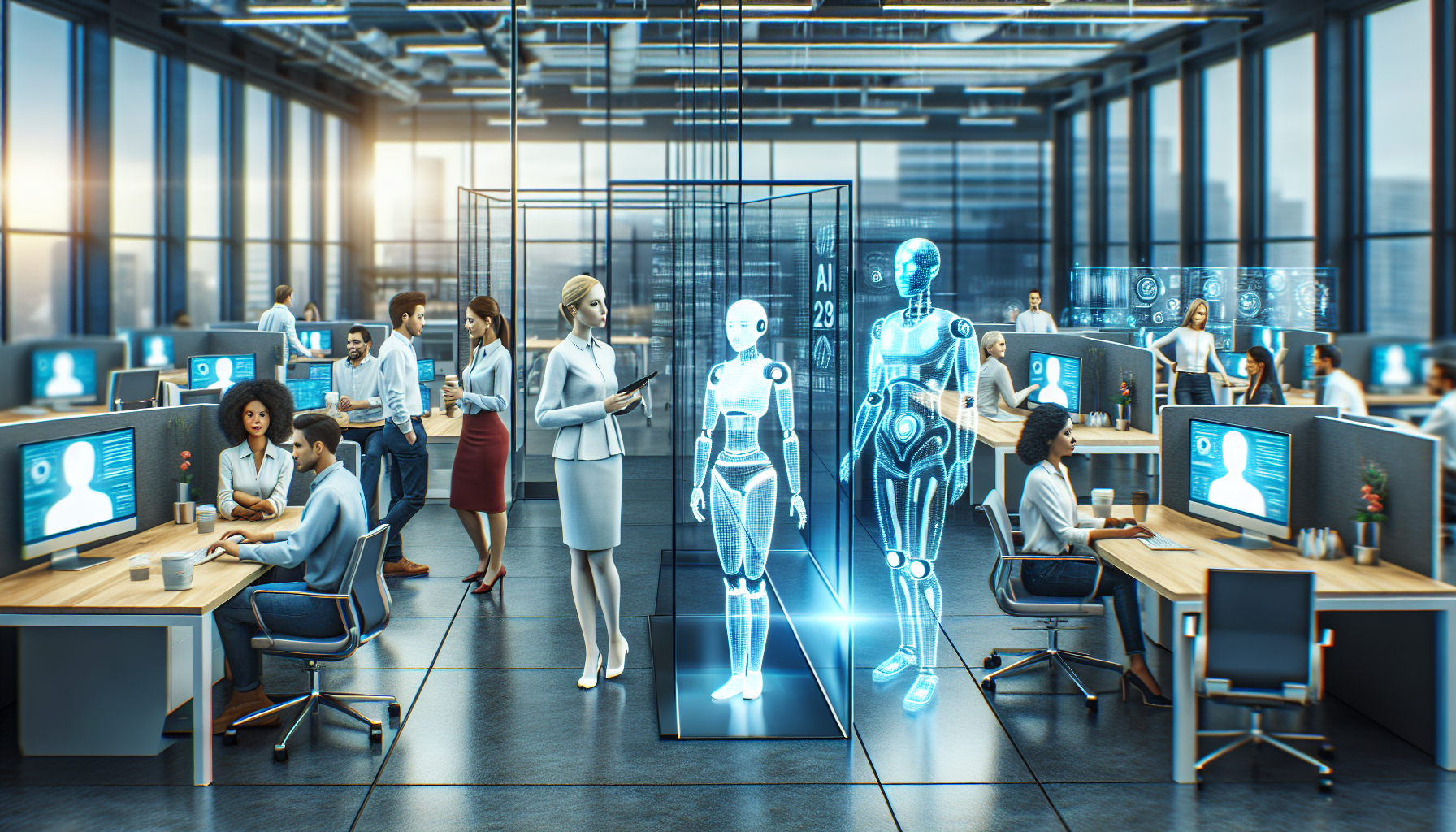
The modern workplace is undergoing a transformation with the rise of digital workers. This seismic shift is being championed by visionaries like Zach Ai, who advocate for AI agent digital workers. In this article, we delve into the implications, benefits, and potential of transforming traditional workplaces using artificial intelligence.
The Evolution of AI in the Workplace
The Evolution of AI in the Workplace has fundamentally altered perceptions and implementations of technology across various sectors. Initially, AI’s role was confined to mechanistic tasks, focusing on efficiency and error reduction in repetitive tasks. Over time, the ambit of AI’s functionality expanded, incorporating more sophisticated roles that required decision-making abilities reminiscent of human intellect. This progression from simple automation to adopting roles requiring cognitive functions exemplifies AI’s transformative journey in the workplace.
One of the pivotal milestones in this evolution was the development of AI digital agents capable of undertaking customer service roles. These agents, equipped with natural language processing abilities, could interact with customers in a manner indistinguishable from human operators. This not only enhanced customer experience by providing 24/7 service options but also allowed human workers to focus on more complex problem-solving tasks.
Additionally, AI applications in data analysis revolutionized decision-making processes. By harnessing the power of machine learning, businesses could predict market trends, personalize customer experiences, and optimize supply chains with unprecedented accuracy and efficiency. This predictive capacity of AI applications offered businesses a competitive edge by enabling proactive rather than reactive strategies.
The integration of AI in the workplace also prompted significant changes in occupational safety. In industries such as manufacturing and logistics, AI-powered robots took over hazardous tasks, significantly reducing workplace injuries. This shift not only emphasized the importance of worker safety but also highlighted AI’s role in creating safer work environments.
However, the advent of AI in the workplace was not without its psychological and sociological implications. As AI took over more tasks, the skill sets required from human workers began to change. There was a growing demand for employees to possess more advanced technical skills and the ability to work alongside AI technologies. This shift led to concerns about job displacement and the need for reskilling and upskilling initiatives.
Moreover, the pervasive use of AI raised questions about empathy, ethics, and the human touch in business processes. Companies had to balance efficiency gains with the need for human-centric approaches, especially in sectors where interpersonal relationships were key.
The evolution of AI in the workplace illustrates not only technological advancement but also a shift in how work is perceived and performed. It underscores the need for a balanced approach that leverages AI’s capabilities while addressing the challenges it presents. As businesses continue to navigate this digital workforce revolution, the lessons learned from AI’s integration into the workplace will undoubtedly shape future innovations and the development of AI agents in the years to come.
Digital Workers and the Future of Employment
Building upon the elucidation of AI’s evolution in workplaces, it’s imperative to delve into the profound macroeconomic and individual repercussions that AI agent digital workers bring to the fore in employment trends. These AI-driven entities are not just altering the traditional definitions of ‘work’ and ’employee’ but are also setting the stage for significant socio-economic transformations. The advent of digital nomadism exemplifies one such shift, where the geographical constraints of work dissolve, allowing for a distribution of jobs that was previously unimaginable. This new era ushers in both opportunities and challenges in equal measure.
On one hand, the critical discussion points towards the possibility of job displacement, a concern often voiced with the rise of any transformative technology. However, a deeper analysis reveals a more nuanced reality, where displacement coexists with job creation. Advanced AI agents take over routine, monotonous tasks, paving the path for humans to engage in more creative, strategic, and emotionally intelligent work. This transition, however, necessitates a re-skilling of the workforce to align with the new demands of the AI-enhanced workplace.
Moreover, the shift is prompting a reevaluation of organizational structures. Hierarchies are becoming flatter, fostering a culture of collaboration between human and AI coworkers. This new dynamic promises enhanced efficiency and productivity but requires a strong foundational understanding and adjustment to the symbiotic human-AI relationship.
Highlighting this transition are businesses that have successfully integrated AI agents, serving as beacons to the tangible benefits and adaptive challenges of weaving AI into the very fabric of the modern workforce. These case studies not only demonstrate the immediate productivity gains and cost savings but also hint at the long-term strategic advantages of building a digital workforce. The narrative clearly emphasizes that the journey of incorporating AI into employment is layered with complexities, demanding a balanced approach that leverages the advantages while mitigating adverse impacts on the job landscape.
Conclusions
AI agent digital workers represent a pivotal turn in how we perceive and engage with work. As these AI-powered entities become increasingly prevalent, they promise to unlock untold efficiencies and reshape the workforce landscape. However, adapting to these changes requires careful consideration of ethical, practical, and economic implications, fostering a balanced approach to this technological evolution.
Leave a Reply