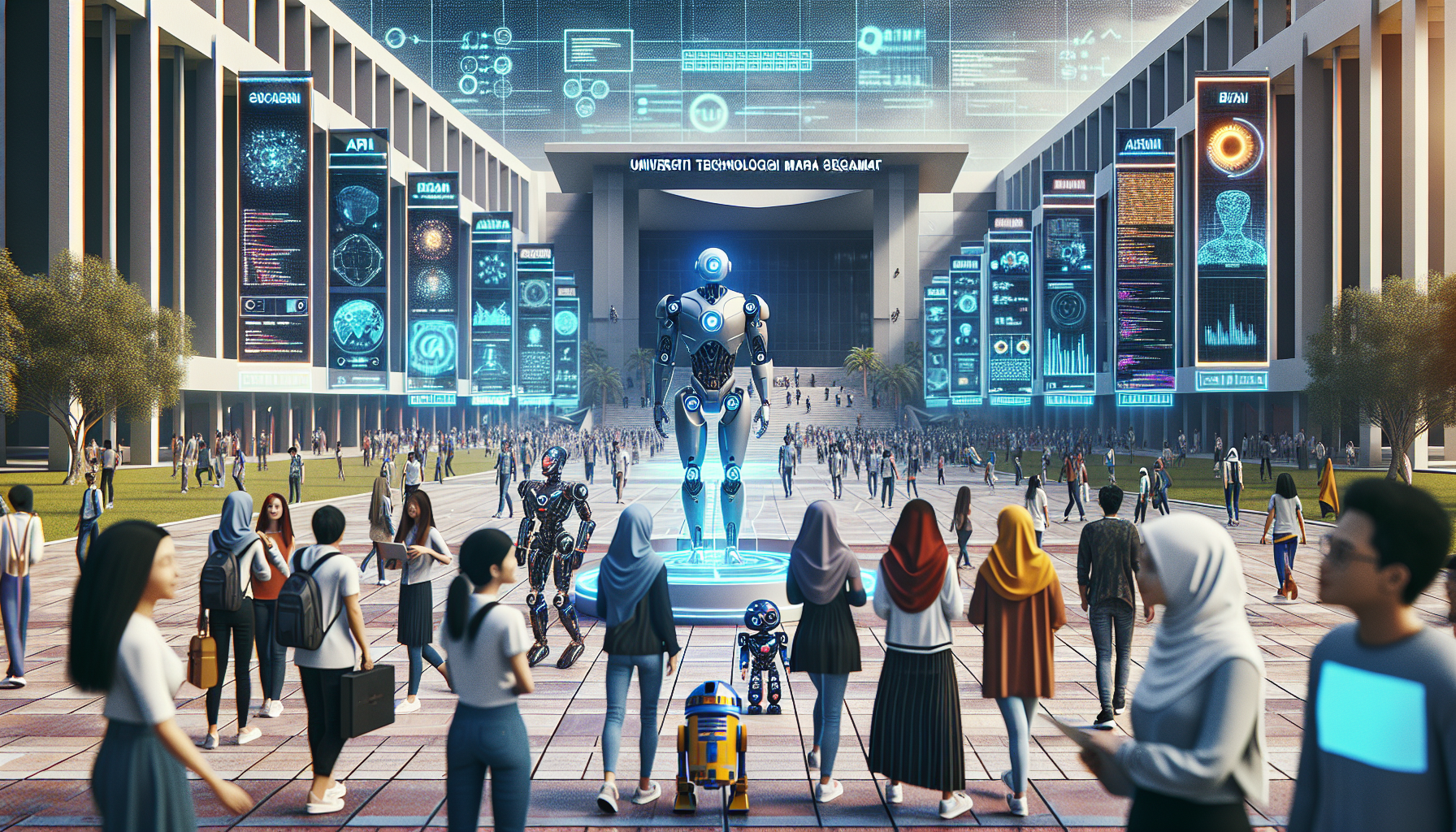
As the frontier of technology expands, Universiti Teknologi MARA (UiTM) Segamat takes a bold step forward to integrate artificial intelligence (AI) agents into the workforce. This strategic move positions the institution as an innovator within the educational sector, cultivating the next generation of digital workers.
Emerging Digital Dynamics at UiTM Segamat
Emerging Digital Dynamics at UiTM Segamat sees the institution not just educating its students about the theoretical aspects of AI but immersing them in its practical applications. By renovating its infrastructure, UiTM Segamat has embedded AI agents across campus operations—from academic scheduling systems to research data analysis tools. These AI agents serve as both educational tools and operational supports, illustrating the future of work where humans and digital workers coexist. Curriculum enhancements ensure students are not only users but also creators of AI technologies, capable of leveraging these skills in real-world scenarios. Collaborations with leading tech companies provide a dual benefit; giving students a peek into cutting-edge AI developments and ensuring their education meets industry standards. This blend of academic rigor with hands-on AI exposure equips UiTM Segamat students to be at the forefront of the AI revolution, bridging the gap between academic knowledge and practical application in the digital age.
Implications and Impact on Students and Industry
Venturing into UiTM Segamat’s adoption of AI digital workers illuminates a transformative path not just for the institution but for its students and the broader industrial landscape. The initiative brings to the forefront an essential shift towards cultivating highly analytical and technical skill sets among students, mirroring the growing demands of a tech-driven job market. This shift is pivotal for enhancing employability in an era where proficiency in artificial intelligence and machine learning becomes increasingly paramount. However, the immersion into AI does not solely prepare students for future professions; it also compels industries to evolve, prompting a reevaluation of job roles and the creation of opportunities that leverage the unique capabilities of both humans and AI agents.
The introduction of AI digital workers stands at the intersection of technological advancement and ethical considerations. As UiTM Segamat nudges its students towards becoming AI-savvy professionals, it concurrently navigates the delicate balance between embracing AI benefits and addressing potential job displacement concerns. This endeavor underscores the importance of fostering a workforce that is not only technologically adept but also versatile in adapting to AI advancements while ensuring job security through the augmentation of human roles rather than their replacement.
Moreover, this initiative’s ripple effect extends to rejuvenating the Malaysian economy by catalyzing sectors toward high-efficiency, AI-integrated operations. The strategic foresight of embedding AI digital workers into the university’s ecosystem promises a future where human talent harmonizes with artificial intelligence, propelling Malaysia towards becoming a competitive player in the global digital economy. However, this journey also necessitates a robust discourse on the ethical use of AI, fostering an environment where technological innovation progresses hand in hand with moral and social responsibility. This dual focus ensures that UiTM Segamat’s venture into AI not only anticipates technological trends but also shapes conscientious AI professionals poised to drive the country’s socio-economic development sustainably.
Conclusions
UiTM Segamat’s integration of AI agents as digital workers reflects a proactive alignment with global technological trends. By fostering a symbiotic relationship between AI and human capital, the university ensures its students are well-equipped for the digital age. This initiative promises to significantly influence the future labor market and drive Malaysia’s economic growth in the AI domain.
Leave a Reply