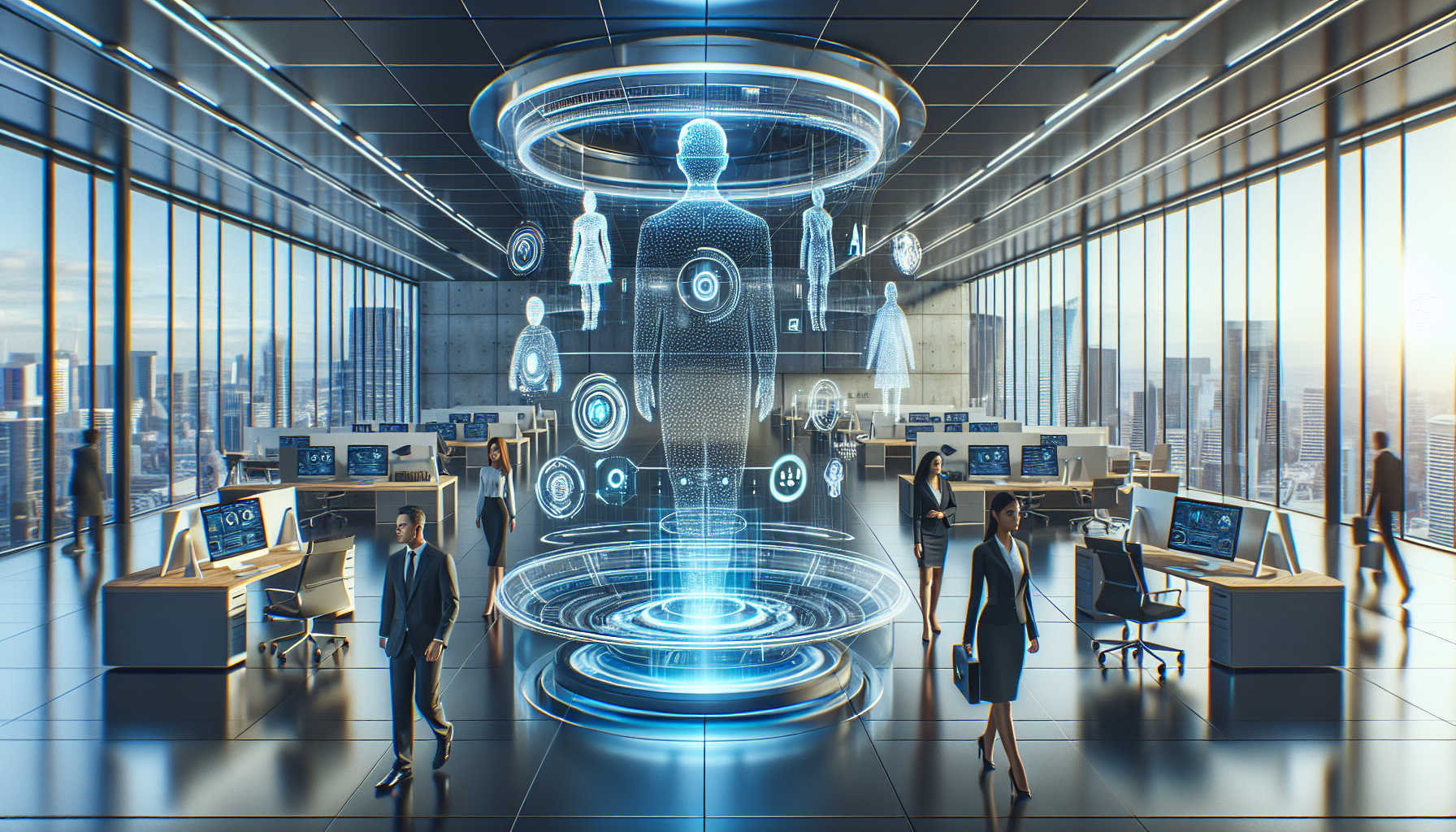
The integration of AI into the workplace has revolutionized how businesses operate. UMPSA AIGENFEST and Assistnify are at the forefront, offering cutting-edge Ai Agent Digital Workers that offer unprecedented efficiencies, insights, and capabilities.
UMPSA AIGENFEST: Industrial AI Transforming Business Operations
UMPSA AIGENFEST has played a pivotal role in revolutionizing the industrial sector through the adoption of artificial intelligence, thereby transforming business operations across the board. By leveraging AI technologies, industries have seen significant improvements in creating value, enhancing productivity, and achieving cost reduction. At the heart of UMPSA AIGENFEST’s contribution is the integration of predictive analysis and machine learning into various industrial processes including market analysis, machinery optimization, and supply chain management. The predictive capabilities of AI enable businesses to anticipate market trends, optimize operation times, and efficiently manage resources, leading to increased competitiveness and growth.
The application of AI in machinery optimization has not only improved performance but also extended the lifespan of industrial equipment through advanced predictive maintenance. This AI-driven approach predicts machinery failures before they occur, reducing downtime and maintenance costs. In supply chain management, AI technologies facilitate real-time tracking and predictive analytics, ensuring optimal inventory levels and timely delivery of materials, which significantly enhances operational efficiency.
However, the implementation of AI within industrial domains does not come without its challenges. Industries face difficulties in adopting AI due to the dynamic, uncertain, and complex nature of their environments. These challenges include the integration of AI with existing systems, the necessity for continuous data analysis, and the requirement for high initial investment. Despite these obstacles, the benefits of AI adoption in the industrial sector are undeniable.
Successful adaptations of AI technology within the industry have seen the employment of collaborative robots (cobots) that work alongside human operators to enhance productivity and safety. These cobots are equipped with AI capabilities, allowing them to learn from and adapt to their environment, leading to continuous improvement in operational processes. Additionally, AI-driven solutions have enabled industries to achieve advanced predictive maintenance, significantly reducing unforeseen equipment failures and associated costs.
In conclusion, UMPSA AIGENFEST’s foray into industrial AI demonstrates the substantial value and efficiencies that can be realized through the integration of artificial intelligence into business operations. Despite the challenges encountered during implementation, the advancements in predictive analysis, machine learning, and AI-driven technologies continue to drive industrial transformation, offering a competitive edge in an ever-evolving marketplace.
Assistnify: The Advent of Autonomous Digital Agents
Building on the groundwork laid by UMPSA AIGENFEST in revolutionizing industrial operations through AI, Assistnify emerges as a pioneering force in the realm of digital workplaces, introducing the concept of autonomous AI Agent Digital Workers. These digital entities signify a major leap from traditional digital nomads by embodying the synthesis of advanced AI capabilities with the flexibility of remote work paradigms. Unlike their human counterparts, these AI agents are not constrained by geographical boundaries, time zones, or even the need for rest, enabling a seamless, around-the-clock work cycle that greatly enhances productivity.
Assistnify’s AI Agents stand at the forefront of adapting to various business needs. Their design allows them to learn and automate complex tasks, ranging from customer service interactions to intricate data analysis, thus providing real-time, tailored solutions to businesses. This level of automation and adaptation is achieved through sophisticated machine learning algorithms and natural language processing, enabling these digital workers to understand and execute a vast array of tasks that were previously exclusive to human intellect.
The implications of Assistnify’s innovation are profound for the workforce and traditional business models. By integrating these AI agents, companies can significantly reduce operational costs while exponentially increasing efficiency and output. This shift encourages a reevaluation of human roles within businesses, highlighting the need for skill adaptation and the potential for humans to engage in more creative, strategic tasks that AI cannot replicate.
However, the ascent of digital workers introduces societal challenges, primarily concerning the balance between AI integration and human collaboration. The potential for job displacement raises questions about future employment landscapes and the necessity for educational systems to pivot towards skills that complement rather than compete with AI capabilities. This balance is crucial in ensuring that the advancement towards a digital workforce augments human potential rather than diminishing it.
In this evolving digital age, Assistnify’s AI Agent Digital Workers are not just a testament to technological progress but also a prompt for a broader conversation about the future of work, the nature of human-machine collaboration, and the societal implications of an increasingly automated world.
Conclusions
UMPSA AIGENFEST and Assistnify exemplify the transformative power of AI in the modern workplace. Their Ai Agent Digital Workers not only optimize business operations but also pave the way for a more dynamic, efficient and collaborative future. The fusion of AI with human ingenuity promises a new chapter in the evolution of work.
Leave a Reply